
Lan Zhen, reporter for Sichuan Online
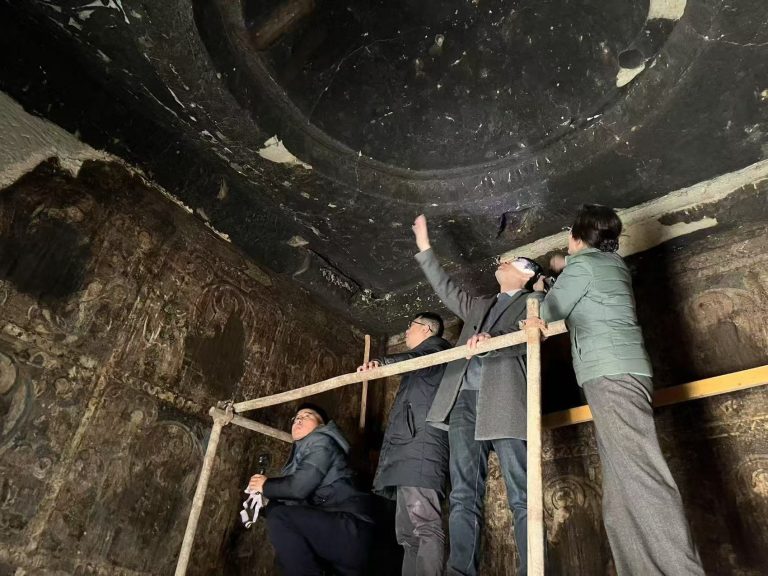
In the vast desert, on the cliff edge of the north bank of the Weigan River valley, millennia-old murals stand silent, as cutting-edge technology quietly unveils the veils of history. The Kizil Grottoes are the earliest excavated and westernmost large-scale cave complex in China, with extant murals covering an area of about 10,000 square meters. Recently, the team of Professor Min Hu from the University of Electronic Science and Technology of China (UESTC) and the team of Professor Hui Zhang from Zhejiang University have been exploring secrets within the grottoes that are invisible to the naked eye. The key is terahertz imaging technology.
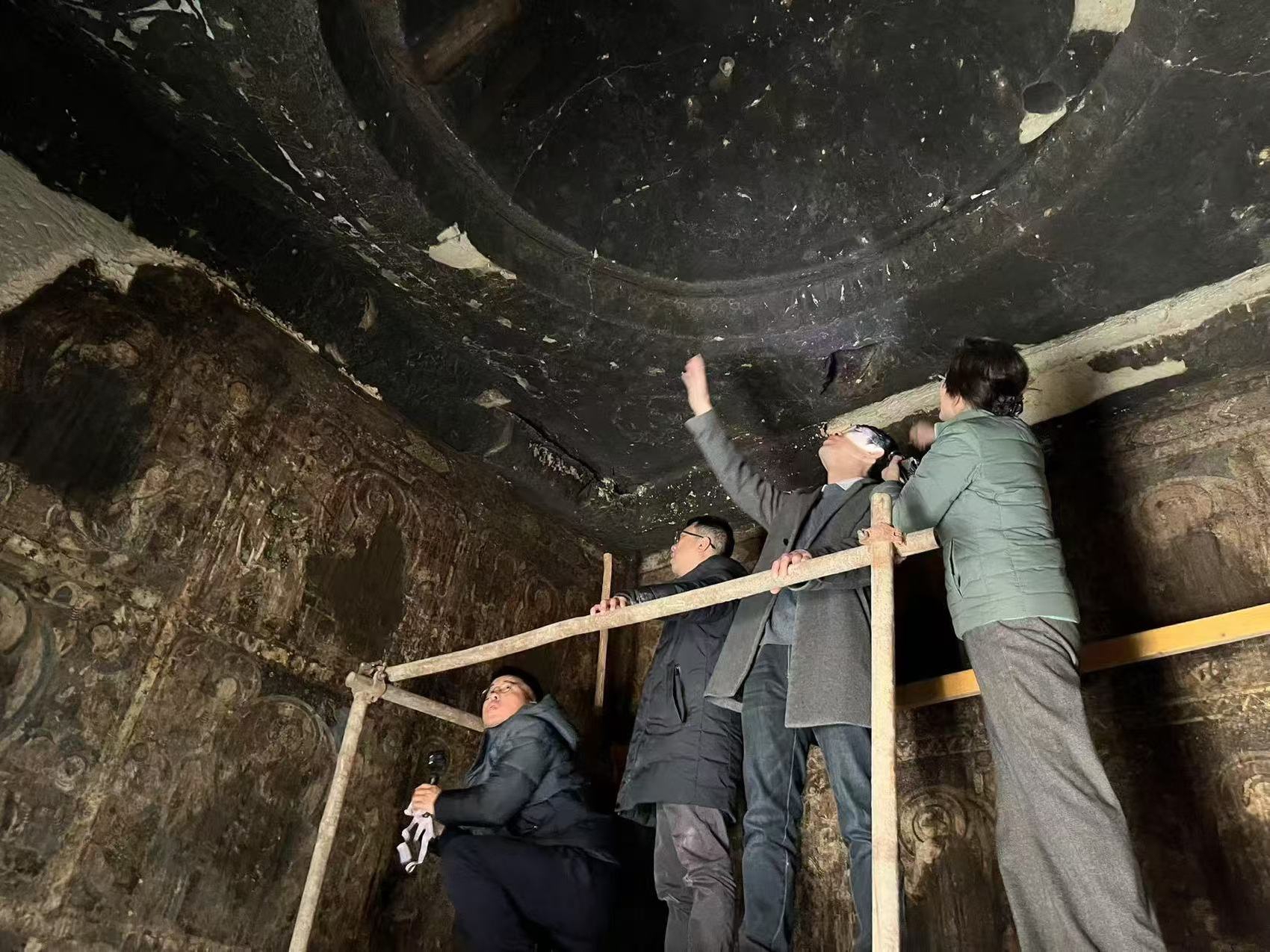
In the Kizil Grottoes, the living quarters of the monks, years of daily fire‑use left the walls and ceilings—once adorned with exquisite murals—coated in layer upon layer of grey‑black soot. “Terahertz imaging technology can non‑destructively penetrate the surface, allowing cultural relics buried in the dust of history to ‘speak’ once more and reveal secrets dating back to the late Eastern Han dynasty,” said Min Hu.
What is it? It possesses captivating penetrability and is hailed as the ‘black technology’ of the future.
Terahertz waves lie between microwaves and infrared waves, making them the least explored and most recently developed band of the electromagnetic spectrum. They are hailed as one of the top ten technologies that will change the future world.
It was not until the 1970s and 1980s that terahertz was formally defined as an independent spectral band. Before that, it was referred to as far-infrared in the optics domain and as submillimeter waves or super-microwaves in the electronics domain.
The penetrative ability of terahertz is one of its most fascinating characteristics. Like microwave radiation, terahertz can penetrate many dielectric materials, non-polar liquids, and non-conductive materials, such as clothing, paper, wood, brick, plastic, and ceramics, while being strongly reflective to metal objects. Terahertz photons carry very low energy—only one ten-thousandth that of X-rays—and thus do not damage the material under examination through ionization. Building on this, after more than 20 years of terahertz research, Min Hu has led his team to open up a wide range of new application scenarios in cultural heritage conservation and archaeological research.
Min Hu explains that terahertz is more sensitive to the layering within objects than X-rays. Terahertz pulse radiation features a picosecond-scale pulse width, enabling effective time-resolved studies. In other words, without touching or cutting open the artifact, the reflection signals between material layers can be used to extract internal layer information and achieve three-dimensional imaging.
On Min Hu’s computer, images produced with terahertz technology show clear outlines. He notes that “terahertz archaeology” began to emerge as early as the 1990s. In 2013, Spanish scientists used a terahertz time-domain spectroscopy system to scan and image the painting *Sacrifice to Vesta*, which was covered by pigment and varnish layers, and discovered an early pencil mark beneath the surface. Upon comparison, it was identified as the signature of the artist Goya. This finding confirmed the painting as an authentic work by Goya, and the study is regarded as a classic case of terahertz technology application.
In addition, many macromolecules undergo rotational and vibrational transitions in the terahertz frequency range, and their terahertz spectra carry a wealth of molecular structural information. Just as each person’s fingerprint is unique, objects also possess their own distinctive “fingerprints” in the terahertz regime—different substances exhibit distinct absorption features, which is why this is referred to as “terahertz fingerprint spectroscopy.” By exploiting this property, the research team can examine lacquerware, murals, clay sculptures, and more, analyzing lipid coatings and pigment compositions.
Min Hu gives an example: in the murals of the Kizil Grottoes, the red hues are often rendered using cinnabar, red lead, or a mixture of both. Terahertz technology can accurately identify the pigments employed, providing one basis for dating the artifacts, and it can also help better restore the appearance of images obscured by soot.
In 2007, Japan established the first open-access database of heritage materials in the terahertz band. Research groups around the world have been continuously testing and contributing terahertz spectral data for different artwork materials, and the database now contains over 1,500 spectral records.
How to Use Terahertz+Archaeology to Uncover the ‘Hidden’ Secrets of Cultural Relics
To apply terahertz technology in cultural heritage research, advanced detection equipment is essential. In the terahertz research center laboratory, the reporter observed a terahertz nondestructive testing device. The core of the device consists of a time-domain spectrometer and a robotic arm that controls the detection probe, with its internal program jointly developed by Min Hu’s team and Miji Technology. Pointing to two thumb-sized components, Min Hu explained: “These are the key parts – they transmit and receive terahertz waves.” Once the system is activated, the robotic arm plans a path using an algorithm and performs non-contact, point-by-point scanning along the normal of the artifact below. During operation, the robotic arm keeps the transmitter–receiver head perpendicular to the object’s surface, while the probe vibrates up and down at high frequency to emit terahertz waves.
Currently, terahertz technology has yielded results in several major archaeological projects. In 2019, the team of Min Hu, together with Zhang Hui’s team at Zhejiang University, the Sichuan Provincial Institute of Cultural Relics and Archaeology, and the Sanxingdui Museum, measured the rust layers on unearthed bronze artifacts. “This is the first time globally that terahertz has been used for three-dimensional tomographic imaging analysis of bronze artifacts,” said Min Hu.
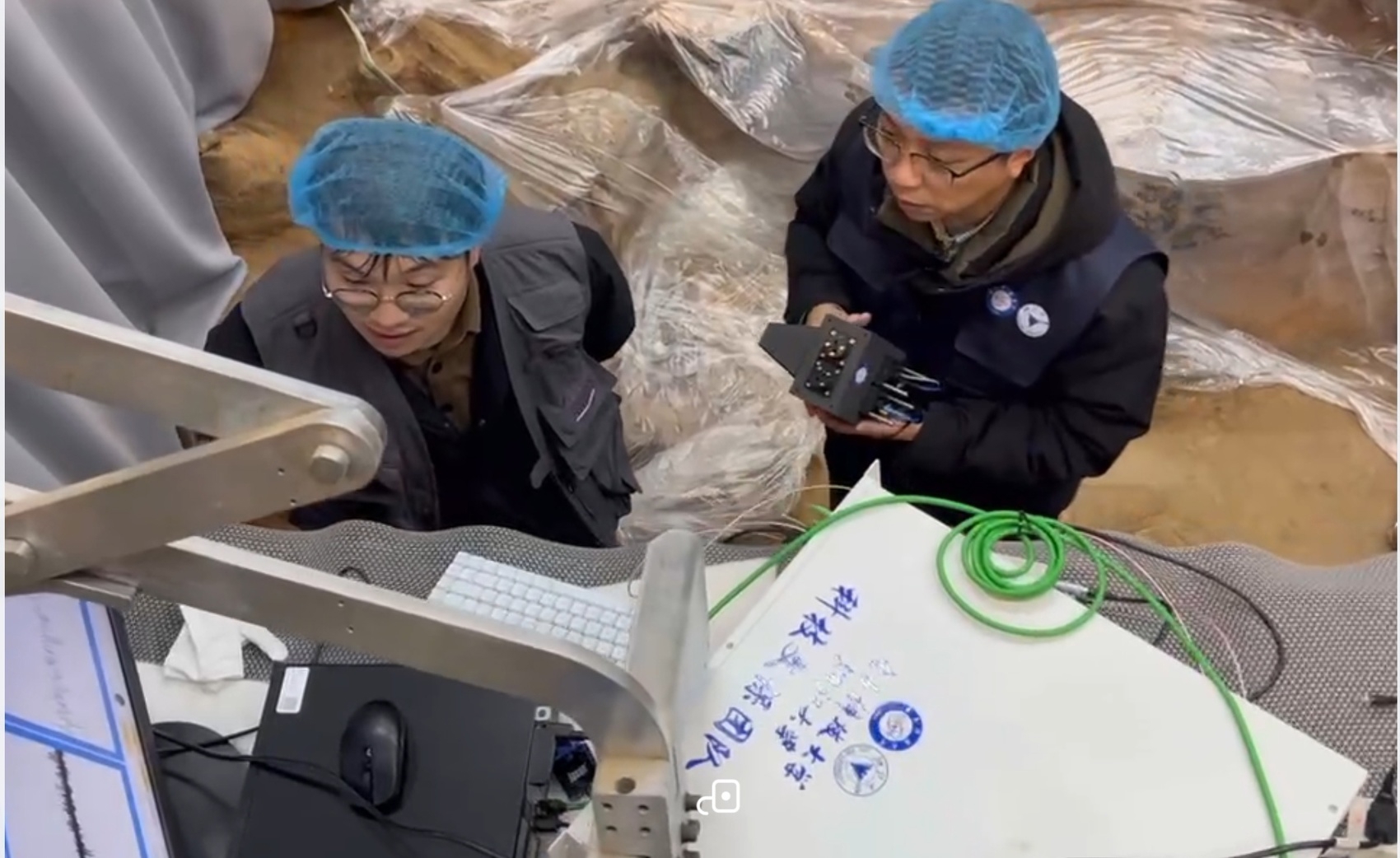
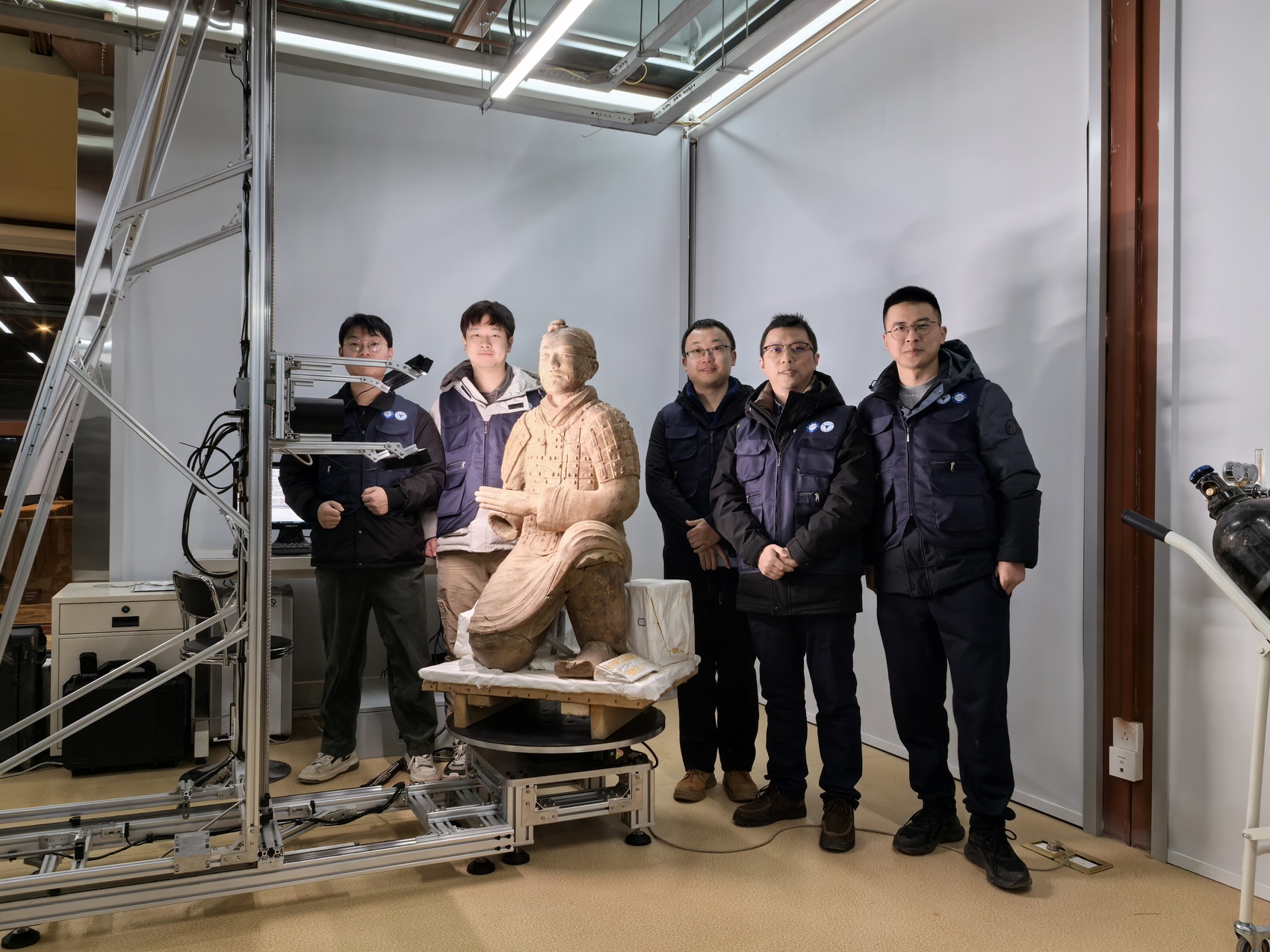
In December 2024, Min Hu’s team participated in archaeological work at Pit 2 of the Terracotta Army in Xi’an. The team innovatively employed a visible-light–terahertz optoelectronic fusion nondestructive testing method to precisely detect and analyze the relevant artifacts. According to team members’ feedback, on-site experts highly praised the results, which not only clearly revealed detailed surface features but also accurately identified internal structures, compositions, and potential defects, offering entirely new technical support for cultural heritage conservation.
Recently, the co-creation implementation track list of the Tanyuan Program2024 was officially released, and the team was selected for the cultural scene co-creation at the Kizil Grottoes in Xinjiang. This project employs terahertz time-domain spectroscopy technology for non-destructive testing, image recognition, and virtual restoration of the smoke-covered murals in Cave 161 of the Kizil Grottoes.
Min Hu revealed that the ongoing terahertz inspection at the Kizil Grottoes covers a large area of the caves, and the work may continue until summer. In particular, given the “weakness” of low terahertz wave power, the team is striving to solve the issue of high‑power radiation sources. “Low‑power signals have weak penetration, which limits the depth, precision, and imaging resolution of material analysis and affects the imaging results.” Conventional terahertz time‑domain spectroscopy imaging technology abroad can only resolve objects down to 300 micrometers — even a strand of hair is difficult to identify. Min Hu’s team introduced near‑field technology, combining terahertz systems with atomic force microscopy. By constructing a vacuum radiation source and improving optical path components and mirrors, they have gradually built China’s first terahertz scattering‑type scanning near‑field microscope system based on a high‑power radiation source, achieving an imaging resolution of 20 nanometers. “This will be of great benefit to future cultural heritage conservation work,” Min Hu said.
What are the prospects? It holds immense application potential in fields such as astronomy, communications, and biological diagnostics.
Currently, terahertz technology is still in the exploratory stage and has broad application prospects in astronomy, communications, biological diagnosis, and other fields. In 2019, scientists observed a black hole for the first time, which was achieved using a terahertz astronomical telescope.
Terahertz imaging achieves nanometer-scale resolution, offering a novel identification approach for biomedical diagnosis. For example, in the detection and diagnosis of dental caries, terahertz imaging enables non-destructive testing: without needing to extract the tooth, it can reveal subsurface white spot lesions and the depth of decay.
Min Hu explained that terahertz waves have higher frequencies than radio waves, enabling them to carry more information. “It can serve as a powerful tool for rapidly transmitting massive amounts of data in future networks.” Reportedly, the world’s first 6G white paper identifies terahertz technology as a breakthrough for communication solutions.
However, terahertz radiation has equally notable physical drawbacks—it is rapidly absorbed by water vapor in the air and experiences loss in common electronic materials such as copper. Some scholars argue that as technology advances, challenges like atmospheric absorption and material loss can be effectively addressed by adopting low-loss materials, optimizing waveguide structures, and increasing emission power, among other approaches.
In addition, terahertz radar, as a cutting-edge technology, also holds enormous application potential.
In the military field, terahertz radar can “see through” the “invisibility cloak” covering an aircraft’s surface, effectively detecting targets. Its high resolution enables roles in precision guidance, battlefield reconnaissance, and more, and in air and missile defense, it can accurately identify and track incoming targets to enhance defensive effectiveness.
In the aviation field, terahertz radar can be used for aircraft navigation and collision avoidance. Compared with conventional radar, it provides more precise position and velocity information, enhancing flight safety.
“We are continuously advancing independent innovation in terahertz technology research and development,” says Min Hu, full of confidence about the future.
Source: Sichuan Online (Chuanguan News)View original text